
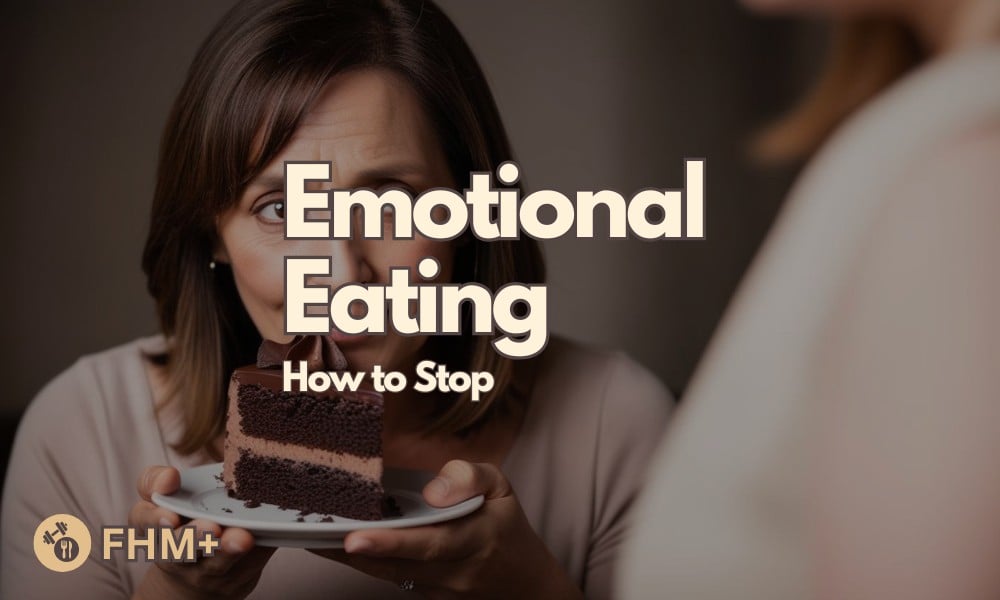
Emotional eating is a common struggle for many of us, myself included. Instead of eating to fuel our bodies, we turn to food as a way to cope with a range of emotions from stress and anxiety to boredom and happiness.
While emotional eating might provide you with some comfort at the moment, it often leads to overeating, poor food choices, and a lot of guilt after the fact.
In this blog post, I’ll dive into what emotional eating is, why it’s so common, and ways you can begin to break free from the cycle that could be leaving you feeling stuck when it comes to your goals and your relationship with food.
What Is Emotional Eating?
Before we get in too deep here, let’s take a second to discuss what emotional eating is. Emotional eating is the act of eating food in response to emotions rather than to physical hunger. Unlike true hunger which usually comes on gradually, emotional hunger can be sudden and can be accompanied by a strong craving for specific comfort foods. Common comfort foods include sweets, salty & crunchy foods like chips, or even fast food.
Common Triggers
The key to overcoming emotional eating is to understand what’s triggering it in the first place. Take some time to think about your emotional eating triggers. Here are some of the most common ones:
Stress: High levels of cortisol (the stress hormone) can lead to an increased craving for high-satiety foods.
Boredom: This is when we find ourselves eating because we simply have nothing else to do (or a perception of nothing else to do).
Sadness: We often use food as a source of comfort when feeling sad or lonely.
Exhaustion: When we’re tired, we often make poor choices with our food and are much more likely to give in to cravings and impulses as our body is trying to compensate for its exhaustion by getting energy from food.
Celebrations and Rewards: We often use food to “treat” ourselves after a long day – citing we “deserve it.” Food is also used heavily in many cultures as a way of celebrating whether that be an accomplishment, holiday, birthday, etc.
Recognizing Emotional Eating
The first step in overcoming emotional eating it awareness; we must become aware of it and recognize it for what it truly is. In order to do this, we need to distinguish it between physical hunger. Here are some things to ask yourself:
- Am I eating because I’m truly hungry or because I’m feeling a certain way?
- Did my hunger come on suddenly or has it built up over time?
- Am I craving a specific food or would any food satisfy my hunger right now? (Would you be happy to eat an apple?)
- Will I feel guilty after eating?
Coping Strategies for Emotional Eating
In order to break the cycle of emotional eating, you must not only be aware of it but also be equipped with strategies to cope with it.
Here are some things that can help:
Get to know your triggers: Set an intention to become aware of triggers and to write them down or mentally take note when you start to feel the urge to emotionally eat.
Find healthy coping mechanisms: Instead of turning to food, try some of these healthier alternatives:
- Go for a walk or engage in some kind of exercise
- Journaling
- Reading
- Deep breathing
- Meditation
- Call a friend
- Drink water and wait 5-10 minutes to see if the craving passes
- Choose a cleaning task or other hobby to keep your mind and hands busy
Make sure your meals are balanced: When you prioritize balanced meals that include plenty of protein and fiber, you’re far more likely to stay full and focused, thereby reducing your chances of overeating due to emotions.
Slow down when eating: Chew your food slowly and intentionally and don’t eat while distracted i.e. mindlessly scrolling or watching TV. Make a deal with yourself that if you’re going to eat, you have to do so sitting down at the table without any distractions.
Don’t cut out or restrict any foods or food groups: Restrictive diets always backfire on us and we end up eating far more when we finally decide we can’t take it anymore. Instead, follow an 80/20 approach and allow all foods in moderation (even treats!). If you’re following a macro-based diet, all foods will fit.
Closing Thoughts
Emotional eating is a very real struggle for so many women, however, it’s a habit that can be controlled and reduced with awareness and healthier alternatives. By dedicating yourself to becoming aware of your behaviors and what’s triggering them, you can set yourself for success by choosing more mindful eating patterns.
The goal is to feel in control of your body and your nutrition so that you can nourish your body without restriction or deprivation which will significantly reduce the instances of emotional eating.
It also helps to have a plan that allows you to understand your nutrition needs, build healthy, balanced meal plans that include plenty of treats, and keep your body moving in a way that leads to consistency and healthy habits.
Consider joining the Simply Strong App so we can do it together.
You’ve got this!