
Weight loss is often celebrated as a catalyst for improved health, however, it’s not without challenges and nuance, especially when it comes to muscle mass preservation. For those taking GLP-1 medications like tirzepatide or semaglutide, weight loss can happen very quickly due to a reduction in appetite and overall calorie intake. While this method is effective for weight loss, it can also put your valuable muscle mass at risk.
Muscle preservation needs to be at the forefront of those taking weight loss medications as it helps ensure the health of your body as well as your ability to maintain your results.
In this article, I’m breaking down why preserving muscle is so important during weight loss and what you can do to ensure you’re protecting and building muscle during your weight loss journey.
Why Muscle Matters
There’s a big difference between weight loss and fat loss, and if you’re taking a GLP-1 medication, you’re going to want to understand that. What we are really trying to lose is excess body fat, however, when weight loss is rapid (as it often is on a GLP-1), you might experience unintentional muscle loss.
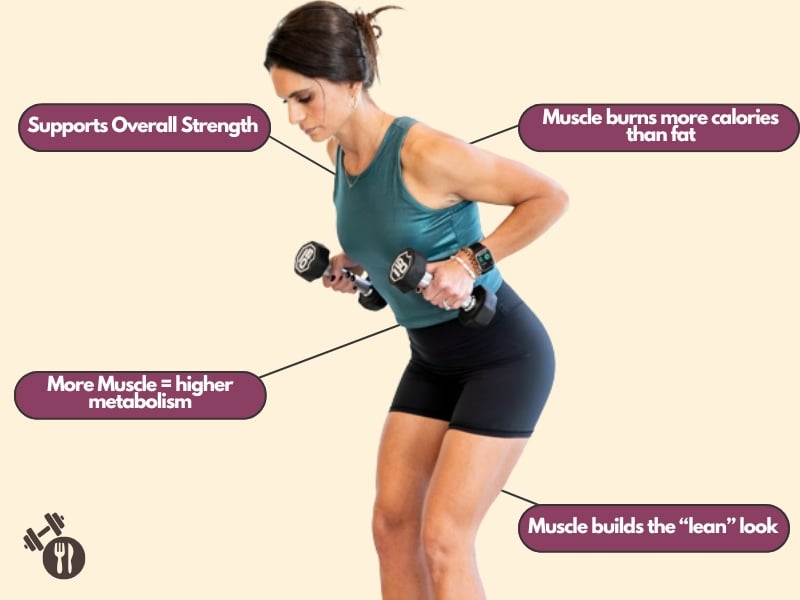
Muscles are very metabolically active tissues, meaning they burn more calories than fat, even at rest. The more muscle you have, the higher your metabolism. When you lose muscle, you are slowing your metabolism, which makes it harder to maintain your weight loss long-term (post GLP-1 usage).
Additionally, muscle supports your overall strength, functionality, and mobility – without muscle, we’re unable to perform activities of daily living well and are putting ourselves at risk for long-term health issues.
Finally, it’s important to understand that muscle is what gives your body shape. If your goal is to be lean, toned, and defined, you need muscle. Losing weight that includes muscle will leave your body looking flat, flabby, and the opposite of “fit,” to be very frank. You want to keep and even try building muscle while losing body fat so that you maintain your health and your shape.
How to Preserve Muscle Mass While Taking GLP-1s
Maintaining muscle mass while taking a GLP-1 requires two key components:
- Proper protein intake.
- A strength training routine.
These are the two most important things you’ll need in order to keep your muscles during your weight loss journey. Both protein and strength training while taking a GLP-1 send strong signals to your body that you are using and prioritizing your muscle mass, therefore, it should be pulling energy from fat stores to make up for the calorie deficit.
How Protein Plays a Role
Protein is the building block of your body. It’s made up of amino acids, which are critical for muscle growth and repair. When you’re losing weight, especially when you’re using GLP-1 medications, prioritizing protein intake helps to ensure that your body is hanging onto its hard-earned muscle.
Here’s why protein is important:
- It helps to boost satiety, which means that it’ll fill you up and keep you full. Our body breaks down and processes protein at a much slower rate.
- It helps to repair your muscles and rebuild them after your workouts. Strength training makes little tears in your muscles, those tears need to be repaired, which requires rest and protein.
- It sends a strong signal to your body that you want to keep your muscle mass. When you’re eating plenty of protein, your body understands that you are fueling your muscles, which will result in increased fat loss while you’re in a calorie deficit.
How Much Protein Should You Eat?
I recommend those taking a GLP-1 medication get between .8-1g of protein per pound of body weight per day. This amount of protein can help you to preserve muscle and drop body fat. For example, a person weighing 150 lbs would want to aim to get between 120-150 grams of protein per day.
Tips for Hitting Your Protein Goal
When you first start prioritizing protein intake, you might be a bit overwhelmed, but don’t worry, it’s not as complicated as you think.
Hitting your protein goal doesn’t need to be complicated! Here are some tips for making it easy:
Begin your day with a high-protein breakfast
I recommend aiming for 30g of protein with breakfast. Here’s a list of high-protein breakfast ideas to help you get started.
Build your meals around your protein source
Start with protein! Focus on finding your favorite lean protein sources like chicken breast, ground turkey, fish, pork, etc. and build your meals from there.
Batch prep your protein sources
Hitting your daily protein goal and building your meals is a lot easier when you have it ready to go in your refrigerator. I like to pick two different proteins (i.e. grilled chicken and ground turkey) at the start of the week, put them in containers, and then use them to build my plates throughout the week.
Be more mindful of your snacks
Most snacks are heavy in carbs and fats and not protein, which is fine, but it won’t help you hit your protein goal if you’re struggling with it. Replace your sugary, carb-dense snacks with high-protein snacks.
Don’t be afraid to supplement
If you need to sneak in a protein shake or a protein bar, that’s perfectly fine! While I would prefer you focus mostly on whole-food protein sources, I am not at all against using supplements like shakes and bars.
The Power of Protein & Strength Training Combined
Proper protein intake on its own will get you pretty far when it comes to preserving your muscles, but it’s not the only piece of the puzzle. You also need to be strength training. Protein and strength training go hand in hand and are both equally important when it comes to building and preserving muscle.
While it’s true that taking GLP-1 medications can reduce your overall energy levels, that doesn’t mean that you shouldn’t be finding ways to fit your strength training sessions in. The good news is that it takes a lot less than you think to get results.
Basic strength training exercises work best, think squats, lunges, push-ups, rows, etc. These basic exercises, when combined in a strategic program will help to stimulate muscle growth and preserve your lean tissue mass while you’re taking your GLP-1 medication.
Example workout: 30-minute legs and glutes with dumbbells
I recommend adding between 2-4 strength training sessions to your week to see the best results. I have dozens of women inside the Simply Strong App who are thriving in their weight loss journey by combining the strategic and realistic strength training programs I offer with a balanced, protein-forward diet.
Final Thoughts
GLP-1 medications can be absolutely life-changing, but I want you to go about it the right way so that all of your time, effort, and money are not going to waste. I want you to know how to build a lifestyle that will support your weight maintenance long after you stop taking GLP-1s. And I want you to know that this is very possible!
By understanding that muscle is the key to health, body composition, a high, functioning metabolism, and a body you can feel confident in, you can absolutely crush your GLP-1 journey and not only come out on the other side with less body fat but with a body you can love and feel great in for years to come.
If you want to make your GLP-1 journey as efficient and effective as possible, join us in the Simply Strong App where you’ll get strategic strength training workouts designed for women over 35 and done on your schedule, bonus high-protein recipes, and a supportive community.